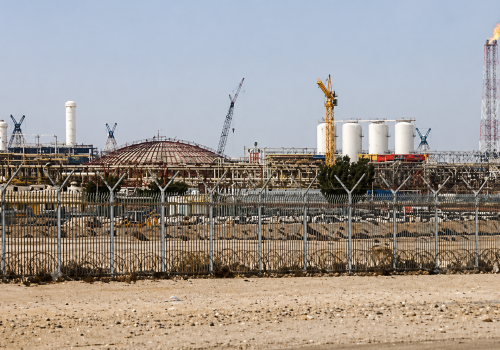
The article reports that the United Arab Emirates has exited OPEC during a period of heightened global energy instability caused by the Iran conflict, which has disrupted key oil supply routes such as the Strait of Hormuz. This creates a significant shift in the global oil market: on one hand, supply is already constrained due to geopolitical tensions, pushing prices upward; on the other hand, a major oil-producing country is leaving a coordinated cartel, reducing its ability to collectively control supply. While the immediate impact is dominated by supply shortages and rising prices, the long-term implications are more structural, as the exit signals a weakening of coordinated production strategies and a move toward more independent, competitive behavior among oil-producing nations.
From an A-Level perspective, this is a strong example of cartel breakdown and its implications for pricing. OPEC functions as a cartel by restricting output to keep prices high; however, when a member like the UAE leaves, it is no longer bound by production quotas and can increase output independently. This increases total market supply in the long run, making the supply curve more elastic and potentially driving prices downward. Additionally, other members may also cheat or increase production to protect their market share, further weakening the cartel’s ability to maintain high prices. This can lead to a situation where increased competition replaces collusion, causing prices to fall and profits to shrink, especially if multiple producers begin acting in their own self-interest rather than coordinating.
The situation also clearly demonstrates a negative supply shock, which is highly relevant for macroeconomics. The Iran conflict has disrupted oil transportation and reduced effective global supply, shifting the supply curve to the left. This leads to higher oil prices, which increases production costs across industries, resulting in cost-push inflation. Higher costs reduce firms’ profitability, decrease output, and may lead to slower economic growth and rising unemployment. This chain of analysis: supply disruption → higher costs → inflation → reduced growth, is essential for A-Level essays and shows how external shocks can transmit through the entire economy.
Finally, the article highlights the role of uncertainty for producers, which is critical for evaluation. With geopolitical tensions, unstable supply routes, and weakening cartel coordination, oil producers face significant unpredictability in prices and demand conditions. This uncertainty can discourage long-term investment in oil production and infrastructure, as firms may delay decisions due to unclear future returns. It can also lead to increased price volatility, making planning more difficult for both producers and consumers. In evaluation, students can argue that while prices may rise in the short run due to supply shocks, long-term uncertainty may reduce investment and efficiency in the market, further complicating global energy dynamics.
Link: https://business20channel.tv/uae-quits-opec-amid-iran-oil-shock-rattling-energy-markets-28-04-2026