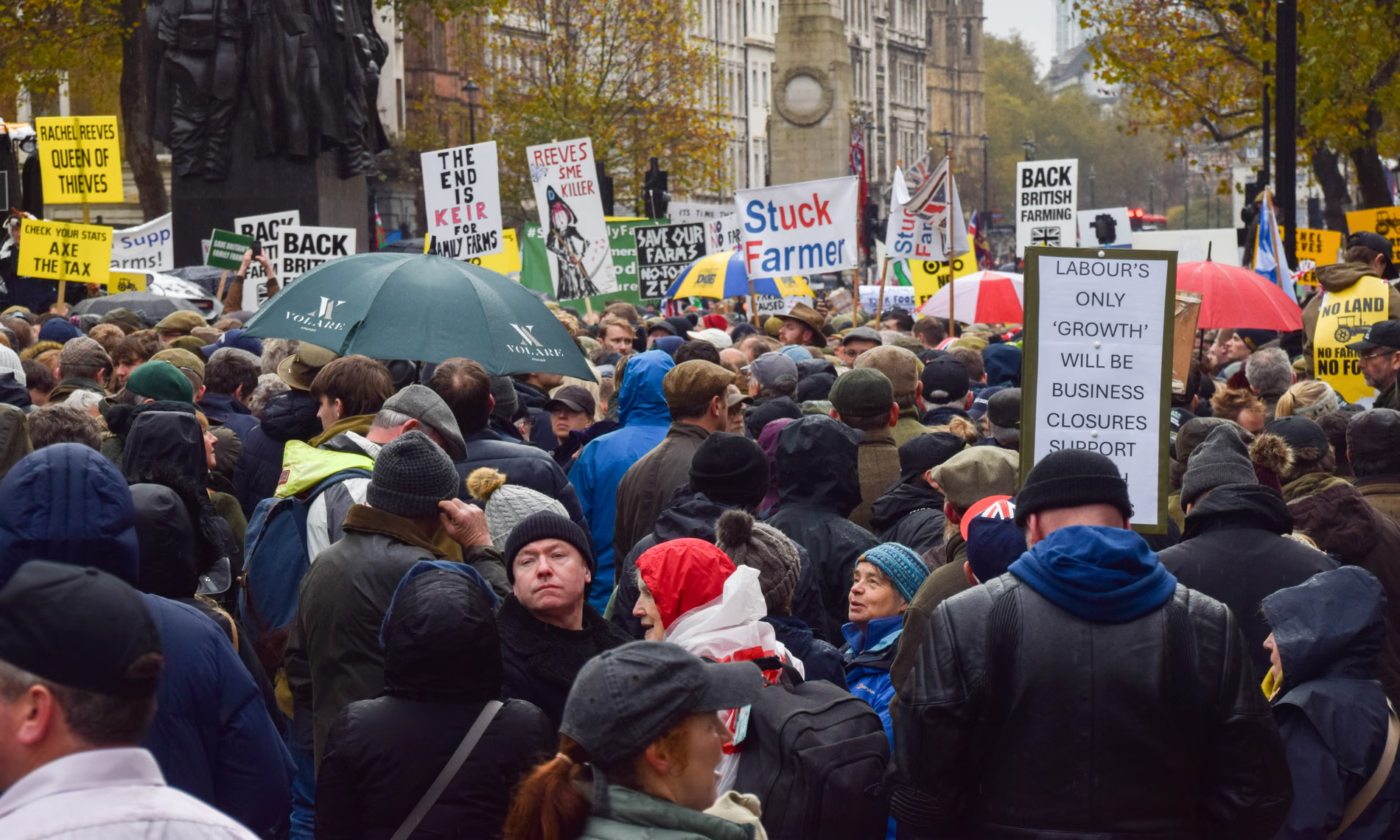
This article highlights a common paradox economists face when analysing public policy. On the surface, applying inheritance tax to farmland appears fair, as it treats agricultural assets in the same way as other forms of wealth. From a societal perspective, this reduces tax avoidance and promotes horizontal equity. However, the policy becomes unfair when applied to certain groups — particularly elderly farmers who have not had sufficient time to adjust or plan under the new rules.
A key concern is the opportunity cost of focusing narrowly on fairness. While the policy aims to close tax loopholes, it may discourage long-term investment in farming. Agriculture is a core sector for any economy, directly linked to food security and supply-side stability. If farmers begin to see selling land as more profitable than continuing production, investment in farming may decline. Over time, this could reduce domestic food production and increase reliance on imports, weakening the UK’s food security.
This case also provides a strong example of government failure. Although the government’s intention is to prevent wealthy investors from using farmland to avoid inheritance tax, the policy risks harming genuine working farmers instead. By discouraging productive activity while attempting to improve fairness, the intervention may generate unintended consequences that outweigh its benefits. It reinforces an important A-Level lesson: well-intentioned policies can still fail if they are poorly targeted or create adverse incentives.
Source: https://www.theguardian.com/environment/2024/nov/25/inheritance-tax-on-farms-should-be-delayed-to-avoid-unfairness-says-thinktank
Mon 25 Nov 2024